When you configure certain Dead Wake bow models, one of the first choices you make is the timing cable routing. Conventional or exposed.
Both do the same job. What changes is where the cables run on the bow, how the draw feels in your hand, and which fishing style each one suits best. Two minutes reading this will save you wondering later.
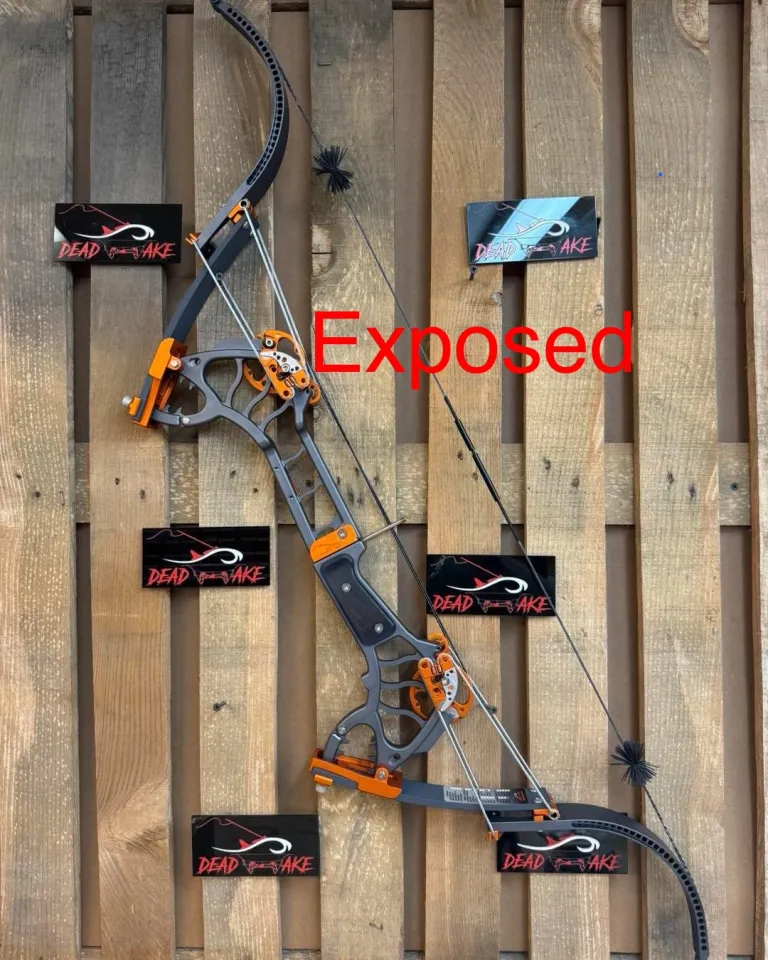
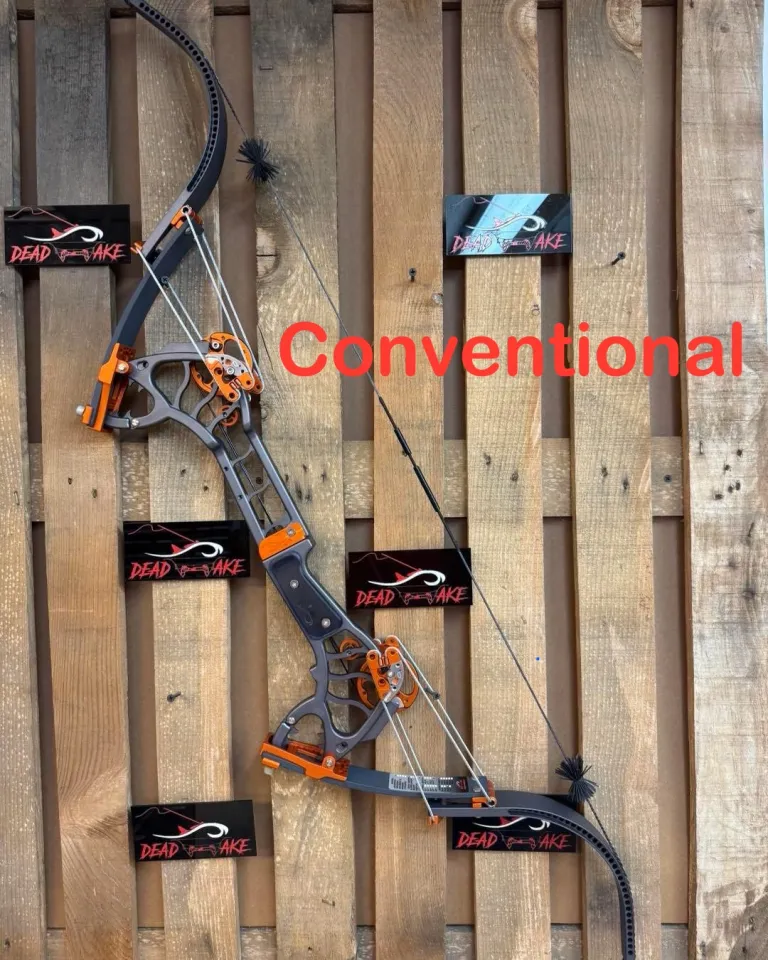
What the timing cables actually do
A lever bow has two timing wheels, one on each side of the riser, that must rotate in perfect synchronisation for the bow to draw and cycle correctly. If one wheel leads the other even slightly, the draw cycle becomes uneven, the cams do not reach full draw together, and the shot is compromised. The timing cables are the mechanical link that keeps the two wheels locked in sync throughout the draw.
They are not the main power cables that connect the cams to the limbs. They are a dedicated synchronisation system whose only job is to make sure both sides of the bow move as one. Getting that coordination right is what allows the whole mechanical system to perform as designed.
The timing cables have to travel from one timing wheel to the other across the riser. How they are routed through that space is what the timing choice determines. Both routes complete the same synchronisation task. What differs is the path they take and what that means for the feel of the bow in your hand.
Conventional timing
In conventional timing, the cables run down the front of the riser and pass under the grip. Your hand sits on top of the grip, which sits on top of the cables. There is light contact between the grip and the cables through the draw cycle.
That contact is not a problem mechanically. The cables are built to handle it and the bow functions the same regardless. What some shooters notice is a slightly firmer feel through the grip during the draw, particularly at higher draw weights. The cables are doing their job, but your hand is closer to the action.
The practical case for conventional timing is tied to back shooting. When you shoot tied to back, the reel attaches to your body and the line runs directly from you to the arrow. In this setup, the bow is often held in a more upright position and drawn straight back. The conventional cable path works naturally with this orientation, which is why it remains the most common choice among tied to back bowfishers.
Conventional timing is also the more traditional of the two setups and what most shooters transitioning from recurves or early lever bows will recognise. If you are not sure which style you will end up preferring, conventional is a reliable starting point that works well across a wide range of shooting situations.
Exposed timing
In exposed timing, the cables run off the back of the riser and stay separate from the grip entirely. Your hand holds the grip; the cables run their own path behind it. No contact between the two during the draw.
The result is a draw cycle that most shooters describe as noticeably smoother. Without the grip pressing on the cable routing, there is less resistance through the draw and a cleaner mechanical feel. This is not a dramatic difference, but it is a consistent one that shooters notice once they have tried both configurations side by side.
Exposed timing is the most common setup for slide reel shooting. On a slide rig, the reel travels along a line attached between the bow and an anchor point rather than being fixed to the shooter’s body. This allows the bow to be used in a wider range of orientations, including horizontal or angled shots that tied to back rigs handle less easily. The exposed cable path suits this freer range of motion and is what most slide shooters gravitate toward.
Beyond the reel type consideration, a lot of shooters simply prefer the feel of exposed timing regardless of how they rig the rest of the setup. There is nothing wrong with choosing it purely on draw feel. If you get the chance to shoot both before ordering, most people who do end up with a preference for exposed. If you cannot try both beforehand, exposed is the slightly smoother place to start.
Side by side
| Conventional | Exposed | |
|---|---|---|
| Cable path | Down the front of the riser, under the grip | Off the back of the riser, open behind the grip |
| Draw feel | Firm, direct | Smoother, less resistance |
| Grip contact with cables | Yes | No |
Does it affect performance?
The short answer is no, not in any meaningful way.
Both timing configurations deliver the same arrow speed, the same stored energy, and the same mechanical let-off from the same draw weight setup. The cams do the same work regardless of which path the cables take to get there.
What changes is the tactile experience of drawing the bow and the ergonomic fit with different shooting styles. These are real differences worth caring about, but they are about how the bow feels and how it suits your rig, not about what it delivers to the arrow.
Some shooters find that the firmer feel of conventional timing gives them a more defined sense of the draw cycle, which they prefer for consistency. Others find that the cleaner draw of exposed timing helps them stay relaxed through the shot. Both are legitimate reasons to choose one over the other. Neither will make the bow faster or slower, and neither is more durable or lower maintenance than the other.
Which one should you choose?
If you shoot tied to back or plan to: conventional timing is the natural fit and the configuration most shooters in that style are already familiar with.
If you shoot on a slide reel or plan to: exposed timing is what most slide shooters run and is likely to feel immediately comfortable if you have spent time around others using that setup.
If you are not sure which style you will end up using, or if you are new to bowfishing and haven’t committed to a reel setup yet: exposed timing is the slightly smoother starting point and gives you a draw feel that tends to suit a wider range of bow orientations and shooting styles as you figure out what works for you.
If you are a hunter rather than a bowfisher: the reel consideration does not apply, and the choice comes down entirely to draw feel preference. Try both if you can. If you cannot, either will serve you equally well in a hunting context.
Either way, you are choosing between two good options. This is not a decision that can go badly wrong, and it is worth far less anxiety than some shooters give it. Pick the one that matches your rig or feels better in hand, and spend your energy on the water.