Choosing a bow is not just about picking the model that looks right. It is about matching a mechanical system to how your body works, where you shoot, and what you are shooting at.
This guide walks through every variable that matters: draw length, draw weight, let-off, riser geometry, and model differences. By the end you should have a clear picture of what to order and why, rather than guessing and hoping.
Start with draw length
Draw length is the first thing to get right, because it is the one variable you cannot compensate for with technique. A bow set to the wrong draw length will feel wrong, shoot inconsistently, and put unnecessary stress on your body over time.
How to measure your draw length
Stand with your arms extended straight out to the sides at shoulder height, parallel to the floor. Have someone measure your wingspan from fingertip to fingertip. Divide that number by 2.5. The result is your approximate draw length in inches.
As a cross-reference, your draw length in inches is typically close to your height in feet and inches converted to inches, minus one. A 6-foot shooter is usually around 28 to 29 inches. These are starting points, not fixed rules.
If you have shot a bow before, the draw length you were comfortable at is your most reliable number. If you are new to archery, err on the slightly shorter side. A slightly short draw is more forgiving than a draw that forces you to overextend, which affects accuracy and puts strain on your shoulder.
Draw length on Dead Wake bows
On Dead Wake bows, draw length is determined by the length of the outer limbs rather than an interchangeable module. The four outer limb sizes are named Super Short, Short, Medium, and Long. You order the bow in whichever outer limb length puts your draw length comfortably within the range for that configuration.
Within that range, draw stops are available to adjust the back wall position and fine-tune where full draw lands for your specific body geometry. This gives you a fixed outer limb length that suits your general draw length, with the draw stop providing the precise adjustment.
Here is what each outer limb size covers across the main models:
| Outer limb size | Leviathan / EF5 / Kraken | Infuzion XL |
|---|---|---|
| Super Short | 23 to 25″ | Not available |
| Short | 25 to 27″ | 23 to 25″ |
| Medium | 27 to 29″ | 24 to 26″ |
| Long | 29 to 31″ | 26.5 to 28.5″ |
The Infuzion XL runs slightly shorter across the board due to the compact riser design. If your draw length measurement sits near the top of one range or the bottom of the next, the longer outer limb is usually the more comfortable choice.
Choosing your draw weight
Draw weight is the most discussed variable in archery and also the most frequently misjudged. More is not automatically better. The right draw weight is the heaviest weight you can draw smoothly, hold steadily, and shoot repeatedly without fatigue affecting form.
The 10-pound adjustment window
Dead Wake bows have a usable adjustment range of approximately 10 pounds below the stated peak weight. If you order a 40-pound model, the functional range is 30 to 40 pounds. This gives you room to start lower while you develop strength and form, or to dial back slightly in cold weather when joints are less cooperative.
It is worth noting that adjusting draw weight down more than 10 pounds below peak is not recommended. Below that threshold the limbs are under-stressed relative to their design, which affects efficiency and can change how the bow cycles.
Draw weight by use case
The right draw weight is not the same for every application, and it is worth thinking about what you are actually doing before choosing a number.
Bowfishing in shallow water: Lower draw weights in the 25 to 35-pound range are effective for most shallow water bowfishing. Fish at these ranges do not require the same penetration that heavier game demands, and lower draw weights allow faster cycling between shots. The Infuzion XL at 29 pounds maximum is specifically built for this kind of shooting.
Bowfishing in deeper water or for larger fish: 35 to 50 pounds provides better penetration through water resistance and more carrying power for heavy fish arrows. The Leviathan and EF5 both cover this range comfortably.
Hunting: Most jurisdictions have minimum draw weight requirements for deer and larger game, typically in the 35 to 45-pound range, though this varies. Check your local regulations. The Kraken at 60 or 70 pounds is specifically aimed at hunters who want more energy for longer shots or heavier game. That said, 50 pounds from a lever bow with good let-off is already a capable hunting setup for most applications.
New shooters or younger archers: Start lower than you think you need to. 25 or 30 pounds is a completely serious bow for learning form, and poor form developed under too much weight is difficult to unlearn. The Infuzion XL was specifically designed for this entry point: 29 pounds in a compact, lightweight platform that suits adults and younger shooters equally well.
Available draw weights by model
| Model | Available draw weights |
|---|---|
| Infuzion XL | 29# max (fixed) |
| Leviathan | 25, 30, 35, 40, 45, 50# |
| EF5 | 25, 30, 35, 40, 45, 50# |
| Kraken | 25, 30, 35, 40, 45, 50, 60, 70# |
Comparing the Dead Wake models
All Dead Wake bows except the Infuzion line share the same cams, wheels, power limbs, modules, and outer limbs. What differs between models is the riser: its geometry, shelf width, grip design, and overall dimensions. These differences sound minor on paper but matter significantly in the hand and under real shooting conditions.
Infuzion XL
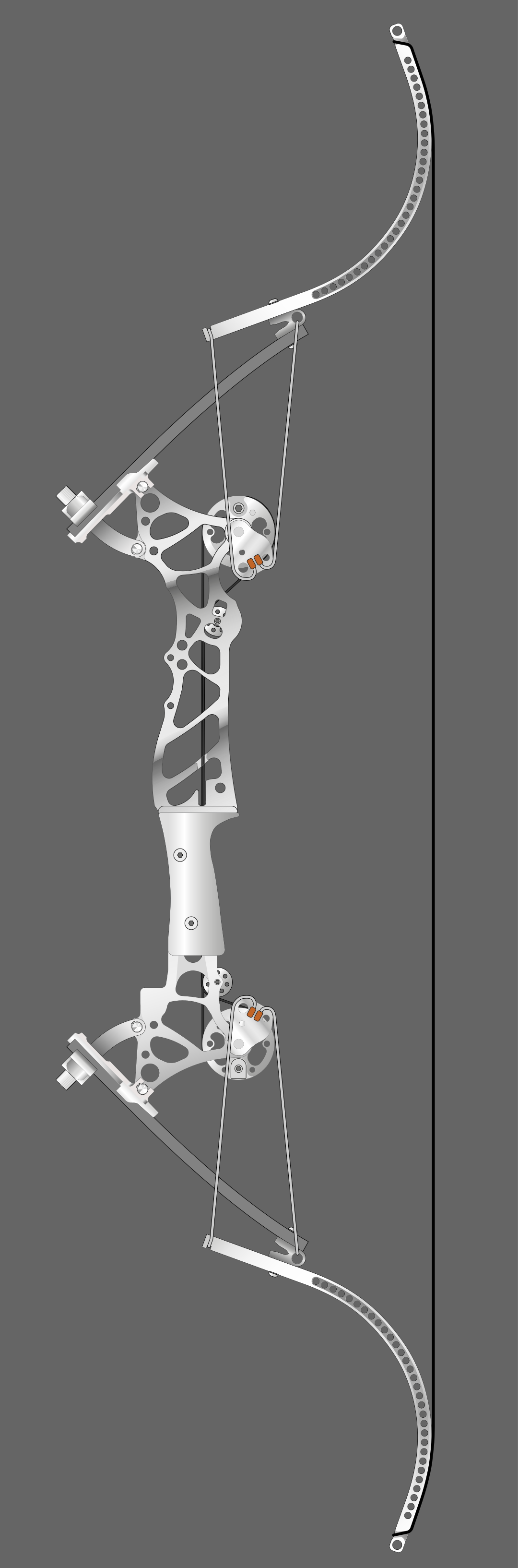
The Infuzion XL is the smallest and lightest platform Dead Wake makes. The riser is compact and the draw weight tops out at 29 pounds. It was designed specifically for numbers shooting and shallow water bowfishing, where the target is close, the shot is quick, and weight and size matter more than raw power.
The cam on the Infuzion XL is not modular. It is a fixed cam that is set for either high let-off or constant draw at the time of manufacture. There is no module to swap later. If you want different let-off behaviour, you need a different cam. Decide which configuration suits your shooting before ordering, because this choice is baked into the bow itself.
The Infuzion XL is not built for deep water or long shots. The 29-pound draw limit means less arrow energy at distance and less penetration through water resistance. Within its intended use it is excellent: light, fast to cycle, easy to manage all day, and simple to carry. Outside that range, the full-size models below are the right tools.
Leviathan
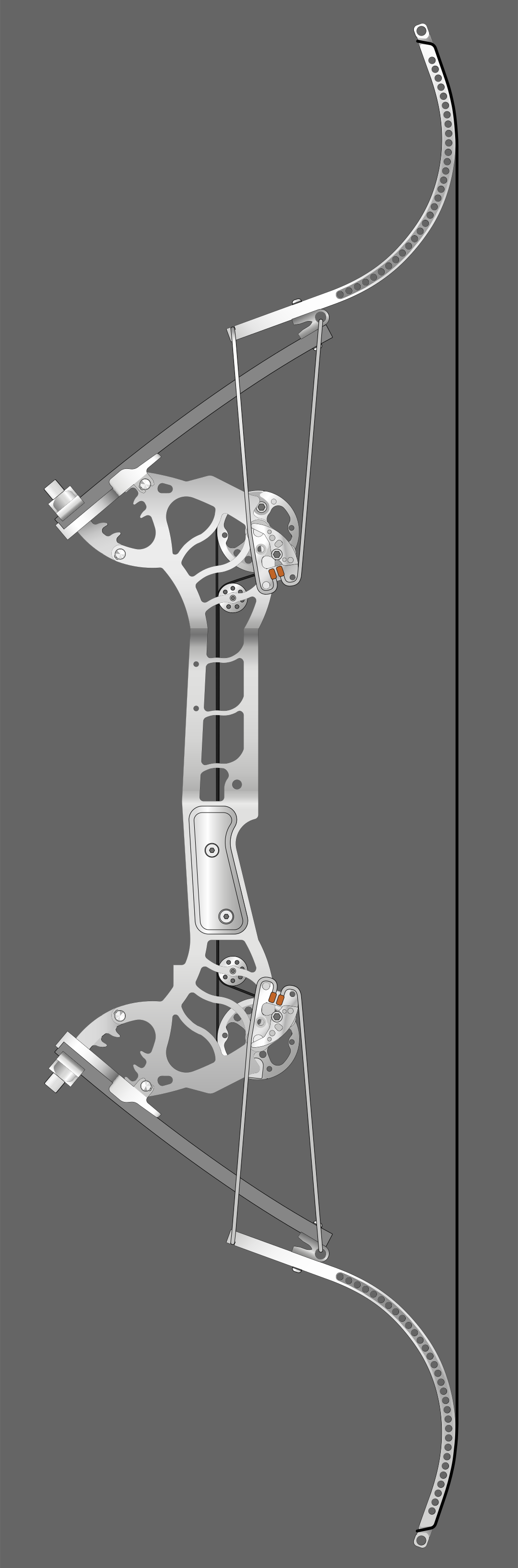
The Leviathan is the full-size platform that established Dead Wake’s reputation. It runs on the same cam system as the EF5 and Kraken, with draw weights from 25 to 50 pounds and all four module options. The riser is full length across all draw length configurations, which gives it a longer sight radius and a stable, planted feel in hand.
The shelf on the Leviathan is half an inch wide, which is designed specifically for shelf rest use. If you are running a full shelf rest setup, this is the geometry it was built around. The grip is slightly wider than the EF5, which suits some hands better and others less so. Weight sits between the two, heavier than the EF5 but not by a significant margin.
The Leviathan is a strong choice for shooters who want a full-size bow, prefer a wider grip, and are running a shelf rest. It is capable across bowfishing and hunting applications and covers the full practical weight range short of the Kraken HD’s heavy weights.
EF5
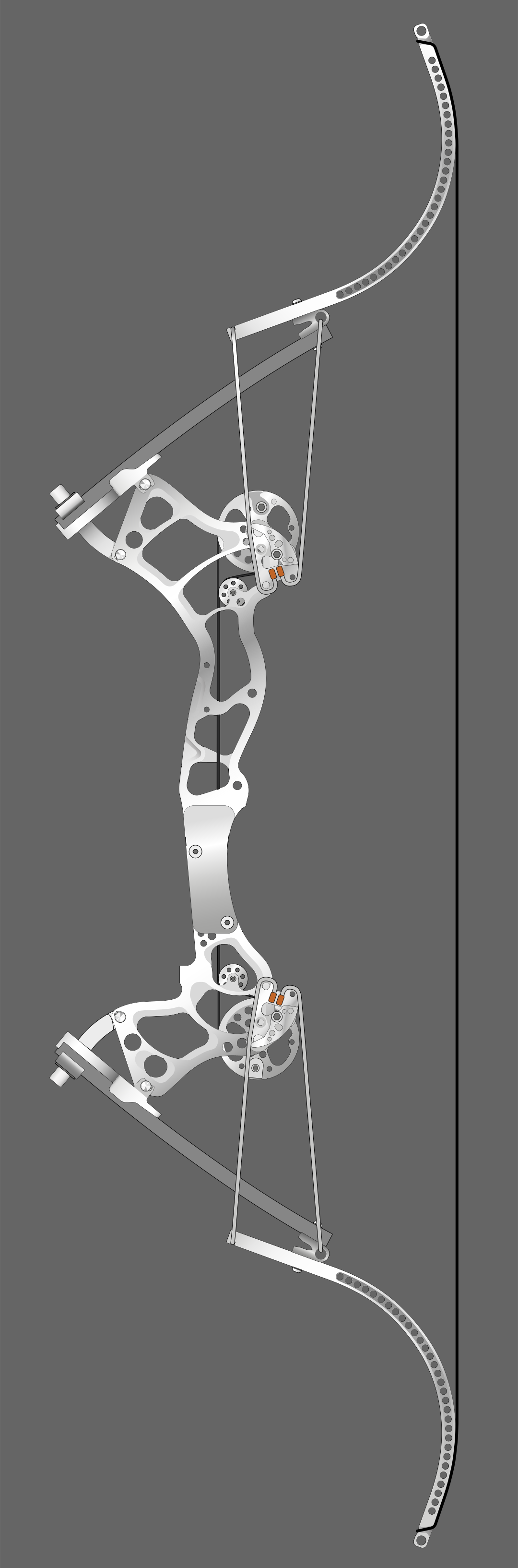
The EF5 shares the Leviathan’s cam system, draw weight range, and module compatibility. The riser geometry is different. The shelf is three-quarter inches wide, which opens up rest options compared to the Leviathan’s half-inch shelf. The grip area is shaped differently, and the EF5 is slightly lighter than the Leviathan across all configurations.
These differences make the EF5 the more versatile platform of the two for shooters who want flexibility in how they rig the bow. The wider shelf accommodates a broader range of rests, and the lighter weight is noticeable over a long day on the water or in the field. The performance between these two models is otherwise equivalent.
If you are deciding between a Leviathan and an EF5, the practical questions are: do you prefer the Leviathan’s grip shape or the EF5’s? Do you need the half-inch shelf geometry for a specific rest? If neither of those has a clear answer, the EF5’s lighter weight and wider shelf give it the slight edge for most shooters.
Kraken
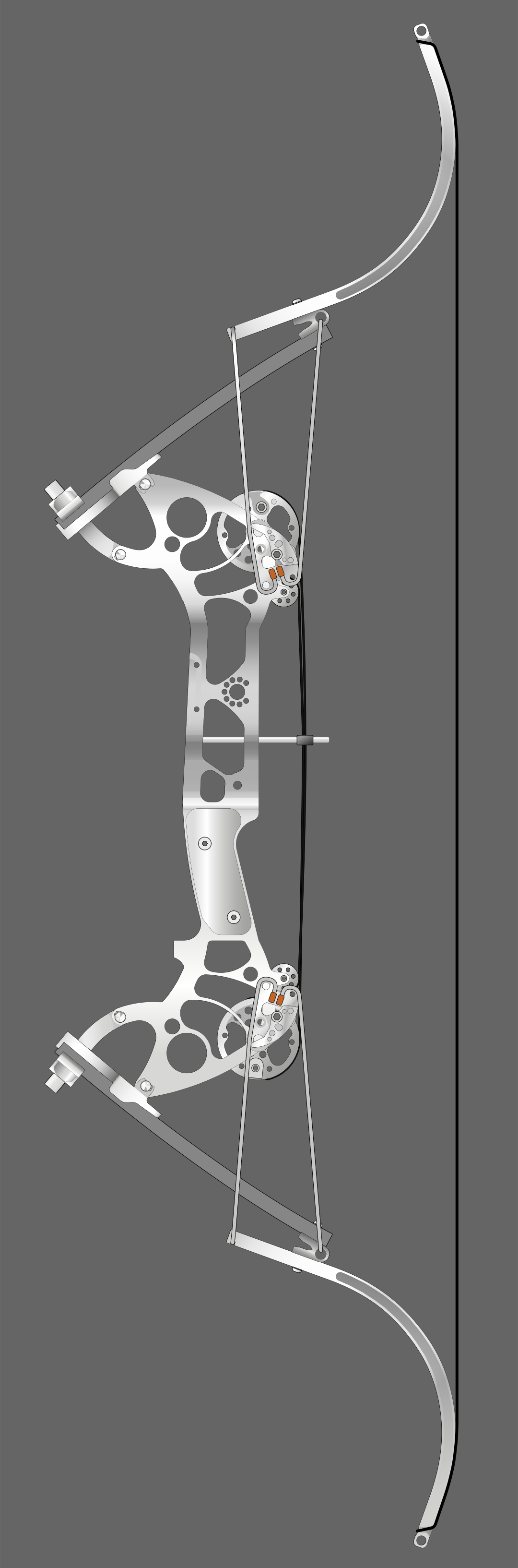
The Kraken uses a wider riser with a 1-1/8-inch shelf, the widest in the Dead Wake lineup. That shelf width makes it the most natural fit for hunting rest setups and gives it a planted, stable feel that some shooters strongly prefer. It shares the same cams, power limbs, and outer limbs as the Leviathan and EF5 across its full draw weight range.
Draw weights from 25 to 50 pounds use the standard outer limbs. At 60 and 70 pounds, the Kraken is fitted with solid outer limbs that do not have the weight reduction holes found on the lighter configurations. This is a structural decision: at those draw weights the outer limbs are under significantly more stress, and the solid design is built to handle it. The power limbs at 60 and 70 pounds are also heavier-duty for the same reason.
The wider riser adds some weight, and the Kraken is the heaviest of the full-size models. For bowfishing, that is a consideration. For hunting, where you are carrying the bow rather than cycling it repeatedly, the extra weight is a reasonable trade for the wider platform and shelf geometry. The Kraken at 60 or 70 pounds is a hunting bow in the truest sense.
Side-by-side comparison
| Model | Shelf width | Draw weights | Lightest bare weight | Best for |
|---|---|---|---|---|
| Infuzion XL | Compact | 29# max (fixed) | 2.66 Lbs | Shallow water, compact platform |
| Leviathan | 1/2″ | 25 to 50# | 3.64 Lbs | Shelf rest builds, full-size platform |
| EF5 | 3/4″ | 25 to 50# | 3.25 Lbs | Versatile, lighter full-size option |
| Kraken (25 to 50#) | 1-1/8″ | 25 to 50# | 3.71 Lbs | Wide shelf, hunting builds |
| Kraken (60 and 70#) | 1-1/8″ | 60 and 70# | 3.84 Lbs | Heavy hunting, solid outer limbs |
Timing: conventional vs exposed
Some models of Dead Wake bows offer two timing cable routing options. This is one of the less visible choices in the order process but one that has a direct effect on how the bow feels to shoot.
Conventional timing routes the cables down through the riser and under the grip. The grip puts light pressure on the cables, which is not a problem mechanically but can create a slightly stiffer draw feel. Conventional is the most common setup and the natural choice if you shoot tied to back, where the reel is attached to your body and the line runs directly from you to the arrow.
Exposed timing keeps the cables on the back of the riser with no grip contact. This typically produces a smoother draw cycle because there is no friction between grip and cable. If you shoot on a slide reel, where the reel travels along a line rather than being tied directly, exposed timing is the more common and generally preferred setup. Many shooters simply prefer the feel of an exposed draw regardless of reel type.
Neither option is wrong. It is a genuine preference question, and if you are not sure, exposed is a slightly smoother place to start.
Putting it together: a decision framework
Rather than summarizing all the variables again, here is a more direct path through the decision for the most common buyer situations.
You are new to bowfishing and want to learn on something manageable ?
Infuzion XL in the outer limb size that matches your draw length, constant draw if you want to develop strength, or high let-off if you want to focus on accuracy from the start. This is a real bow that will take fish and teach you form without overloading you.
You bowfish primarily in shallow water and want the lightest possible setup ?
Infuzion XL covers most of what you need. If you are already shooting a heavier bow and want a backup or secondary rig, a 25-pound EF5 or Leviathan with a high let-off module is also an excellent shallow water setup with more flexibility for other uses.
You want one bow that handles both bowfishing and occasional hunting:
EF5 or Kraken at 40 or 45 pounds with a 50-percent let-off module. That combination gives you enough energy for both applications, manageable hold weight, and a platform that transitions between uses without needing significant modification.
You hunt primarily and want a bow built for that application:
Kraken at 45 or 50 pounds if that weight range covers your local regulations and game. Kraken at 60 or 70 pounds if you are hunting larger game, shooting at longer distances, or if your regulations require heavier draw weights. 75-percent let-off makes the hold at full draw very manageable for longer waits.
You are an experienced compound or recurve shooter transitioning to a lever bow:
Go with a draw weight close to what you were shooting on your previous platform, sized to the draw length module that matches your measured draw. The feel at full draw will be different but the physical mechanics of drawing transfer directly.
If you are genuinely unsure after working through all of this, reach out before ordering. Getting the setup right the first time is always better than adjusting afterward.